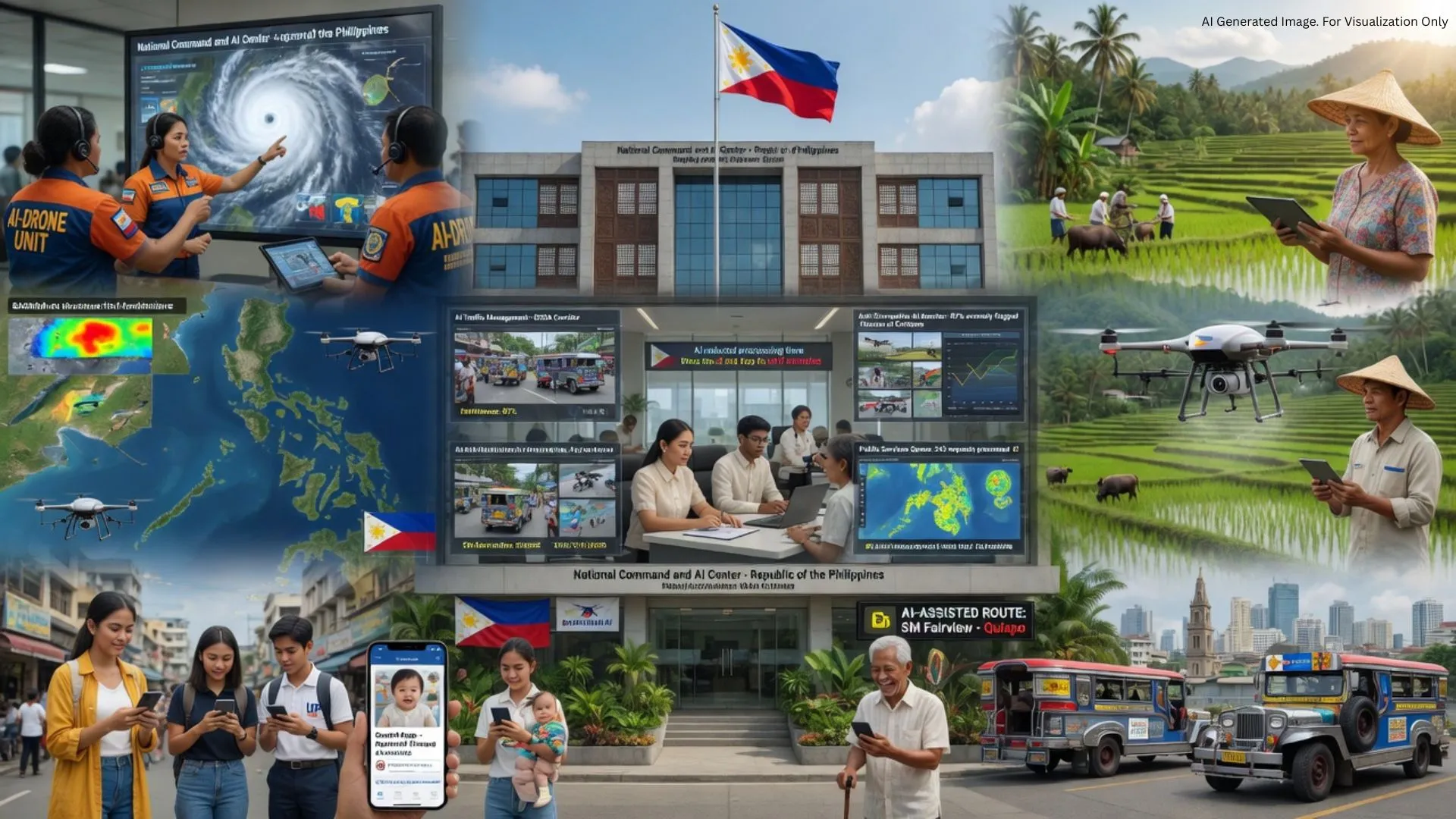
AI for the People: How Innovation is Humanizing Philippine Governance
For years, "government service" in the Philippines often brought to mind long queues, thick folders of paperwork, and the phrase "balik ka na lang bukas" (just come back tomorrow). But walk into a government office today, and you’ll notice a quiet revolution.
From the Department of Science and Technology (DOST) to the DICT, the Philippine government is no longer just "talking" about the future—it is building it. By 2026, the transition from experimental AI to real-world deployment has hit full stride, turning artificial intelligence into a tool for empathy, speed, and inclusivity.
Key Takeaways
-
AI is a Tool for Inclusion: Homegrown solutions like iTANONG ensure that technology is accessible to everyone, regardless of their technical skill or language.
-
Precision Saves Lives: AI-powered weather and agricultural tools are moving us from "reactive" to "proactive" governance.
-
Efficiency is the Goal: Centralizing services via the eGovPH app is reducing red tape and making the bureaucracy more transparent.
Real-Life Impact: AI Beyond the Hype
AI innovation in the Philippines isn't about replacing people; it's about making services work for them. Here is how it’s changing lives right now:
-
Smarter Disaster Preparedness: Through Project Gabay (AI4RP), PAGASA now uses AI to provide weather forecasts at a neighborhood level. Instead of a general "rainy in Metro Manila," families in specific barangays get 14-day lead times with 2-kilometer precision, allowing for safer evacuations and better crop protection for farmers.
-
Breaking Language Barriers: The DOST-ASTI’s iTANONG initiative is a homegrown AI that talks like we do. Whether you ask a question in Tagalog, English, or Taglish, the system understands. This allows ordinary citizens to navigate complex legal or government databases without needing to know "tech-speak" or coding.
-
Faster Public Services: The eGovPH App has already reached over 9 million registered users. By integrating AI into this "one-stop-shop," the government has assisted over 843 Local Government Units (LGUs) in automating permits and clearances, turning weeks of waiting into minutes of clicking.
-
Health and Equity: In March 2026, the Philippines joined the HealthAI Global Regulatory Network, signaling a shift toward AI-powered disease surveillance and outbreak prediction. New tools are helping the DOH link individuals in remote provinces to better care through data-driven planning.

New Frontiers: Education and Health
The government is expanding AI’s reach into the most vital sectors of Filipino life:
1. Modernizing the Classroom (AGAP.AI)
In early 2026, the Department of Education (DepEd) launched AGAP.AI (Accelerating Governance and Adaptive Pedagogy through AI). This isn't about robots teaching students; it’s about Microsoft Learning Accelerators helping teachers identify exactly which child is struggling with reading or math in real-time.
-
Result: In pilot areas like Bais and Cabanatuan, 100% of assessed learners showed improved literacy levels as teachers used AI to automate administrative tasks, spending more one-on-one time with students.
2. Predictive Healthcare and Anti-Microbial Defense
The Philippines is now a leader in the HealthAI Global Regulatory Network. The Department of Health (DOH) is deploying AI to track Anti-Microbial Resistance (AMR). Instead of waiting for a manual report from a remote clinic, AI analyzes data from hospitals and pharmacies instantly to predict and stop disease outbreaks before they spread.
3. Depoliticizing Social Aid
One of the most human applications of AI in 2026 is its use in social aid distribution. By using AI to audit lists for programs like the 4Ps, the government ensures that senior citizens and vulnerable sectors receive their benefits automatically, removing the "middleman" and ensuring help goes exactly where it's needed.
By the Numbers: The AI Growth Surge
The appetite for AI in the Philippines is at an all-time high. Data shows a massive shift in how Filipinos perceive and use this technology.

Conclusion
The "Growing AI Innovation" in the Philippines is more than just a tech trend; it is a commitment to a more responsive government. By focusing on real-life applications—from recognizing a tricycle on a busy street to predicting a storm in a specific village—the Philippine government is proving that the best technology is the one that serves the people first.
Ready to experience a smarter government?
-
Download the eGovPH App today to access your digital ID and browse over 20 government services in one place.
-
Support Local Innovation: Follow the DOST and DICT social media pages to stay updated on new AI-driven tools designed for your community.
-
Join the Conversation: Share this article and let us know—which government service do you want to see "AI-powered" next?
-
Subscribe: Register to Smicos AI now so that you can be AI-powered too.