Hotel Operations, Made Easier: How Smicos Empowers Non-Technical Teams to Automate Guest Inquiries
“How many guest inquiries does your front desk answer before lunch, and how many of them are the same question?”
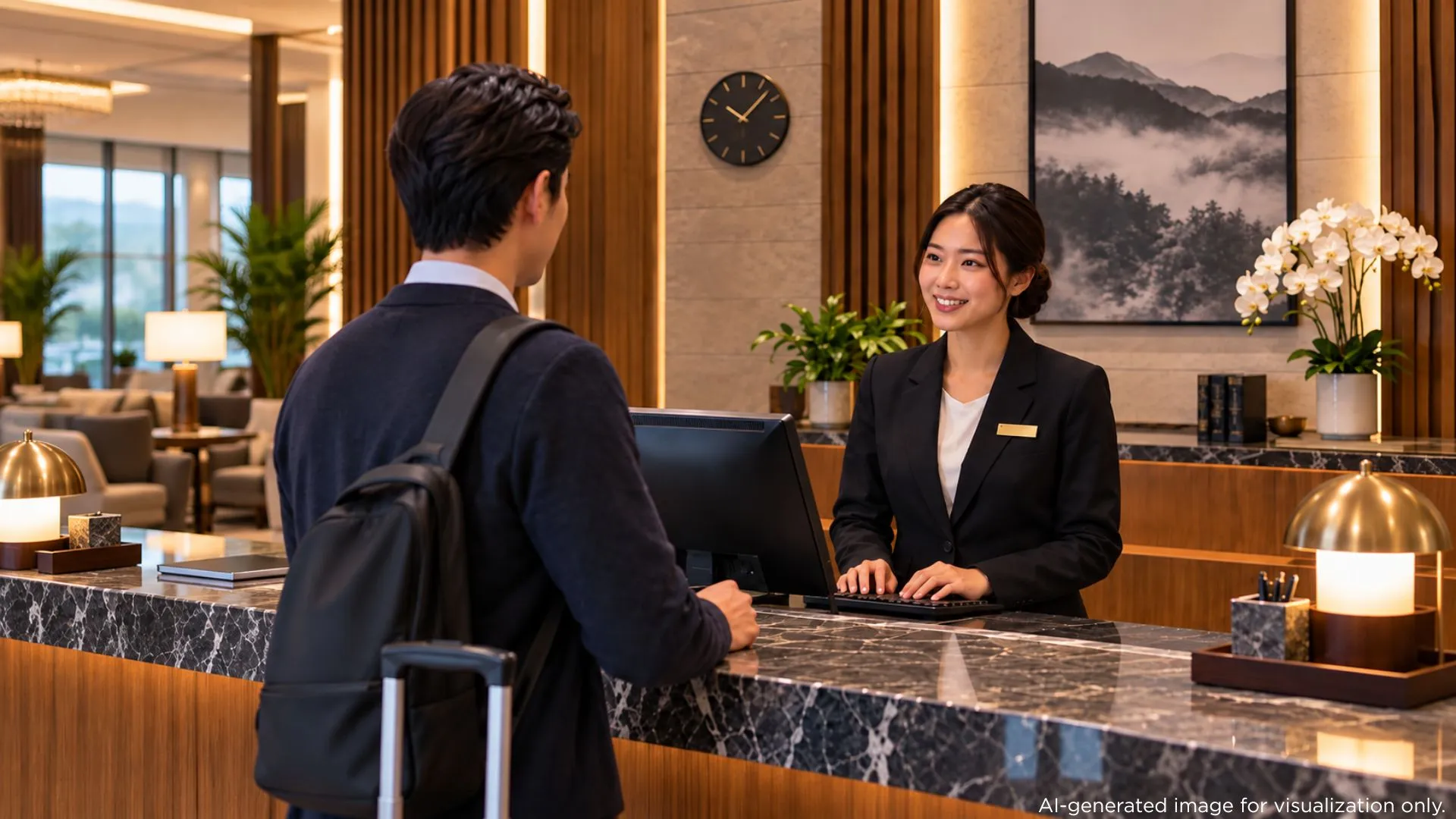
For most hotels and resorts in the Philippines, the answer is uncomfortable. Check-in times, room rates, availability, parking, breakfast inclusions, directions from the airport. The questions arrive through Facebook Messenger, Instagram DM, website chat, email, and phone. Often all at once, and often while the same staff member is checking in a guest standing right in front of them.
This is the daily reality of hotel operations, and demand is growing. The Philippines recorded 5,949,350 international visitor arrivals in 2024, a 9.15 percent increase over the previous year, while tourism revenue reached a record ₱760.50 billion (DOT, as reported by PIA, 2025). More arrivals mean more guest inquiries. They rarely mean more staff to answer them.
Automation is the obvious response as it may help with routine inquiries. The problem is that most hotel teams hear "automation" and picture an IT project: integrations, developers, a system nobody on the floor knows how to change; a perception that is outdated.
Key Takeaways
-
The Philippines recorded 5,949,350 international visitor arrivals in 2024, a 9.15% increase over 2023. (Department of Tourism, 2025)
-
Tourism revenue reached a record ₱760.50 billion in 2024, up 9.04% year-on-year and 26.75% above pre-pandemic levels. (Department of Tourism, 2025)
-
70% of hotel guests prefer chatbots for simple queries but want human connection for complex issues. (Hotel Tech Report, 2025)
-
58% of guests feel AI improves their stay, while 42% find it less personal. (Hotel Tech Report, 2025)

What Does a Typical Day at the Front Desk Actually Look Like?
Ask anyone who has worked a Philippine hotel front desk and the pattern is consistent. A small team handles arrivals, departures, phone calls, walk-ins, and messages across at least four digital channels. During peak season or a long weekend, the volume does not scale. The staff simply absorb it.
The inquiries themselves are not difficult. They are repetitive. Room rates, availability for specific dates, check-in and check-out times, whether pets are allowed, how to get there from the nearest airport. Individually, each takes under a minute. Collectively, they consume the working day.
Two things go wrong as a result. Guest inquiries arriving outside office hours sit unanswered until morning, and a traveller planning a weekend at eleven at night will usually book with whoever replies first. Meanwhile, the staff member answering the fiftieth identical message is not available for the guest who actually needs help.
Which Hotel Tasks Can Actually Be Automated?
The useful starting point is separating the repeatable from the relational. For repeatable tasks, automation helps reduce guest waiting time by handling common questions and routine requests as soon as they come in, instead of leaving guests waiting for a staff member to become available. Four categories cover most of what a hotel automation system can genuinely take off your team's plate.
1. Answering frequently asked guest inquiries. Rates, availability, amenities, house rules, parking, check-in and check-out times, directions. These have fixed answers that rarely change, which makes them the safest and highest-volume category to automate first.
2. Providing booking information. Showing room types, current rates, and what is available for a given date range. This is where booking management stops being an administrative task and becomes a revenue one. A guest who receives availability in seconds is far more likely to complete the booking than one who waits until morning.
3. Qualifying inquiries. Not every message is a booking. Lead qualification means asking the few questions that separate a serious enquiry from a general one, such as dates, number of guests, and room preference, then routing the qualified ones to your team with that context already gathered.
4. Delivering timely responses across every channel. Messenger, Instagram, and website chat should not be three separate inboxes checked at three different times. Consolidating them is what makes timely responses possible without adding headcount.
What stays human: complaints, special requests, group bookings, accessibility needs, and anything involving a guest who is upset or confused. These are relational, not repeatable, and they are exactly the interactions your team should be free to handle properly.
Do You Need a Technical Team to Set This Up?
Not necessarily. With Smicos, basic chatbot configuration can be handled by nontechnical hotel staff, including setting up FAQs, standard responses, property information, and simple conversation flows without coding.
More advanced automation may require technical support, particularly when Smicos needs to connect with other software or applications that have access to live rates, availability, booking data, or trigger more complex workflows.
The key distinction is that routine guest-facing automation can be relatively easy to manage, while deeper system integrations require additional technical setup.
What Do Guests Actually Dislike About AI?
Any honest discussion of hotel automation has to address this, because the same research that supports automation also flags its limits.

Forty-two percent is not a rounding error. It represents nearly half of guests signaling that something may be lost when hospitality becomes too automated. After all, hospitality is built on human connection, personal attention, and the feeling of being genuinely cared for. These are the qualities technology should enhance, not replace. and hospitality more than most sectors is sold on exactly that human quality.
This simply tells us that hotels should avoid automation. Rather than, automation becomes a problem when it tries to replace human interaction rather than support it. When a chatbot fails to recognize frustration or refuses to connect guests with a real person, it can turn a simple inquiry into a frustrating experience. A chatbot that repeatedly sends guests through the same three options doesn't improve service. It only adds another obstacle to getting the help they need.
The hotels getting it right use automation as a filter, not a barrier. Simple questions are answered instantly. Anything else reaches a person quickly, with the conversation history intact so the guest never repeats themselves.
How Does Smicos Simplify Hotel Operations?
Smicos AI is a Philippine-built conversational AI platform developed by PurpleBug. It works as an AI chatbot for hotels across different multi-channel platforms such as Facebook, Instagram, and website chat, and it is designed to be configured by the people who run the property rather than by developers.
Automated replies. Smicos answers guest inquiries instantly, at any hour, in the language your guests use. Rates, availability, amenities, and policies are answered the moment they are asked.
Booking inquiries. Smicos can help collect a guest’s preferred dates, party size, and room requirements, then route the inquiry to the hotel team. A hotel should confirm whether its specific setup connects to its reservation system before claiming that the chatbot displays live availability, confirms room bookings, or prevents double bookings.
Lead qualification. Smicos gathers dates, party size, and room preference before a conversation reaches your team, so staff open an inquiry that is already qualified.
Customer management. Guest interactions are captured in one place, building a picture over time of what guests actually want to know. That tells you where your website, listings, and rate communication need work.
Live agent handoff. When a conversation needs a person, Smicos passes it to your team along with everything discussed. Given that 42% of guests already find AI less personal, this is not an optional feature. It is the one that makes the rest defensible.
How Smicos and PurpleBug Help Hotels Stay Responsive
By unifying guest conversations across Facebook, Instagram, and web chat into a single system, Smicos ensures no guest inquiry goes unanswered and no booking opportunity is lost to a delayed reply. Combining automated replies, booking management, lead qualification, and customer management in one platform, PurpleBug helps hotels and resorts respond faster without expanding their teams, and without requiring anyone on staff to become a technical specialist.
Automation should simplify hotel operations, not complicate them. The goal is a property where routine questions answer themselves, qualified enquiries reach the right person, and the front desk is free to do the part of the job guests actually remember.
Ready to simplify your hotel operations? Visit smicos.com to learn more, or contact the PurpleBug team today.
Conclusion
Hotel operations have always balanced attention against volume. What changed is the volume. With 5,949,350 international visitor arrivals in 2024 and tourism revenue at a record ₱760.50 billion, more guests are asking more questions across more channels than any front desk was staffed to handle.
The research points to a simple answer. Seventy percent of guests already prefer chatbots for simple queries and want a person for anything complex. That is not a demand for less human service. It is a request to stop spending human attention on questions that never needed it.
A well-configured hotel automation system like Smicos Booking Manager, does exactly that. Routine questions are answered instantly, enquiries arrive already qualified, and guests who need a person reach one quickly. The 42% who find AI less personal are not an argument against automating, but the reason to automate carefully, because systems that hide the exit damage the guest experience they were meant to protect.
For properties that have delayed this because it sounded technical, that barrier is gone. Modern platforms are configured by the people who run the hotel, not by developers.
References
Congressional Policy and Budget Research Department. (2025). 2024 performance of the PH tourism industry (Facts in Figures No. 2025-52). House of Representatives of the Philippines. https://cpbrd.congress.gov.ph/wp-content/uploads/2025/07/FF2025-52-2024-Performance-of-the-PH-Tourism-Industry-2.pdf
Hotel Tech Report. (2025). The state of hotel guest technology report 2025. https://ucarecdn.com/2deeb04a-8ff2-4f8c-9dee-a0ea7be0eef0/2025StateofGuestTech.pdf
Philippine Information Agency. (2025, January 7). PHL hits record high tourism revenue in 2024. https://pia.gov.ph/news/luzon/phl-hits-record-high-tourism-revenue-in-2024/