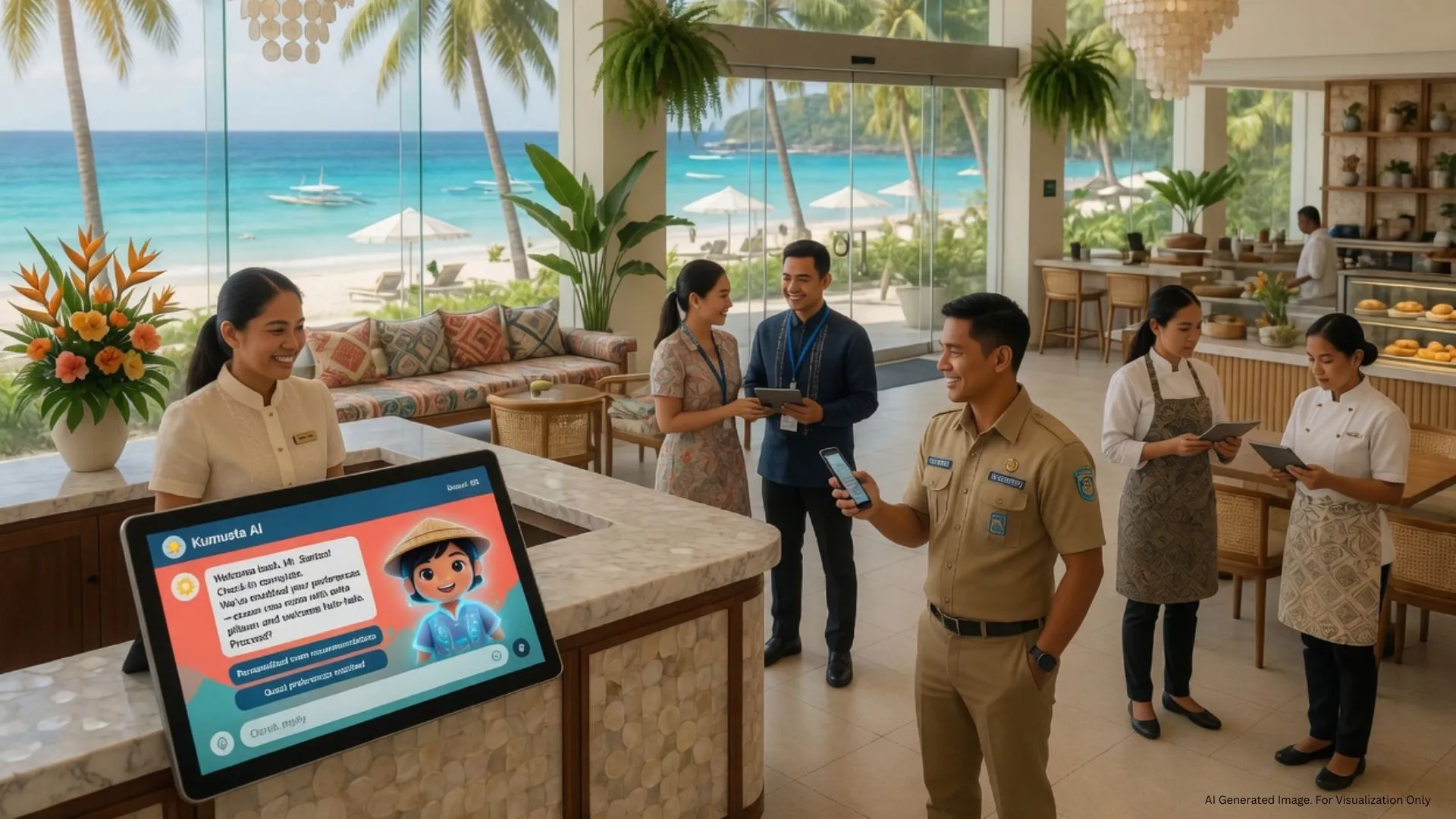
Why 2026 is the Year the "Front Desk" Became a Digital Ally for PH Tourism
The Philippine hospitality industry has always been defined by the "Filipino Brand of Service", that warm, intuitive human touch. But as we navigate 2026, a new reality has set in: that human touch is becoming a luxury supported by a digital backbone. With the Philippines serving as a central hub for ASEAN tourism growth this year, the industry is undergoing a structural shift to meet the demands of a hyper-connected, global traveler.
At the heart of this transformation is the evolution of the chatbot from a clunky FAQ pop-up to a high-efficiency revenue engine that manages the entire guest lifecycle.
Key Takeaways:
-
Revenue Growth: AI-powered personalization is driving an 18% to 25% climb in conversion rates by offering the right "add-on" (like a spa credit or airport van) at the exact moment of intent.
-
Operational Efficiency: Local hotels using AI-integrated systems report a 45–60% reduction in average handling time for guest requests.
-
National Policy Support: The DICT’s SONAI 2026 initiative is actively pushing for AI adoption to help MSMEs and boutique resorts compete with global giants on service quality.
-
Direct Booking Power: By bypassing OTAs (Online Travel Agencies) through chatbot-led direct bookings, hotels are saving significantly on commission fees, boosting their bottom line.
The New Standard: 24/7 Response in a Mobile-First Archipelago
In a country where mobile internet usage is among the highest globally, a traveler’s interest has a shelf life of seconds. Whether it’s a local "staycationer" in Makati or an international tourist eyeing Siargao, they don't wait for "office hours."
Data from the 2026 PITON-Global Industry Report indicates that travel operations in the Philippines supported by AI now achieve a first-contact resolution rate of 82–91%. This means 9 out of 10 inquiries, about boat transfers, pet policies, or dietary options, are solved instantly, preventing "booking abandonment" before it even happens.
CRM & Sales: Turning "Inquire po" into Confirmed Revenue
One of the most significant shifts in 2026 is the integration of Chatbots directly into Customer Relationship Management (CRM) systems. In the past, a chat was just a conversation; today, it’s a data goldmine.
-
Sales Automation: Modern AI assistants in PH hotels are now driving a 30% increase in direct reservations. By displaying real-time pricing and availability directly within Viber or WhatsApp, bots eliminate the friction of jumping between apps.
-
Hyper-Personalized CRM: As highlighted by The Tech Clouds (2026), the era of manual data entry is over. AI-powered CRMs now automatically update guest profiles with "micro-preferences", such as a preference for dried mangoes in the room or a specific floor level, captured during a chat.
-
Dynamic Upselling: The sales process doesn't end at booking. Smart bots analyze guest data to offer timely upgrades (e.g., "Would you like to add a sunset cruise to your Boracay stay?") based on the guest's past spending habits.
Automation: The "Skeleton" of Filipino Hospitality
Automation isn't about replacing the "Filipino heart"; it’s about protecting it. Local hospitality leaders are using AI to handle the "repetitive heavy lifting" that leads to staff burnout.
According to the DICT’s 2026 AI Roadmap, the push for "People-Centric AI" allows front-desk teams to step away from the screen. By automating Wi-Fi resets, housekeeping schedules, and invoice generation, staff can focus on high-value interactions, like welcoming a guest with a genuine smile rather than a "just a moment, I'm checking the system."
The "Filipino Heart" Meets Agentic AI
We’ve moved past the era of clunky, pre-programmed bots. In 2026, the gold standard in the Philippines is the Human-AI Hybrid model. While AI handles up to 80% of transactional touchpoints, like dynamic pricing updates and booking modifications, it allows Filipino staff to focus on "high-empathy" moments.
A study from Bestlink College of the Philippines highlights that while younger Filipino travelers (Gen Z and Millennials) overwhelmingly prefer AI for its speed (78% positive outlook), the magic happens when sentiment analysis is involved. If a guest’s tone shifts toward frustration, the AI instantly flags a "Digital Concierge" to step in with the signature Filipino warmth that a machine cannot replicate.
Conclusion
The narrative that AI replaces Filipino hospitality is dead. In 2026, AI is the skeleton that supports the "Filipino heart." By removing the digital tax of administrative tasks, chatbots are allowing our local tourism workers to return to what they do best: making every guest feel like they’ve found a home in the Philippines.
Efficiency with a Soul: The Smicos Advantage
The "wait and see" approach to AI in the Philippines is over. Today, local resorts and hotels are either AI-enabled or they are struggling under the weight of manual inquiries and missed bookings.
At Smicos, we’ve localized our Smicos Chatbot to understand the unique nuances of Philippine tourism. It doesn't just answer questions; it understands the "Pinoy" traveler’s intent, integrates with your local Property Management System (PMS), and turns "Inquire po" into a confirmed booking while your team focuses on the guests right in front of them.
Ready to elevate your guest experience and boost your RevPAR? Explore Smicos Chatbot Solutions