
Customers are getting used to faster service. From instant payments and same-day deliveries to real-time messaging, people increasingly expect quick responses in their everyday digital experiences.That expectation increasingly carries over to customer service, where the time between a question and an answer can shape how customers perceive a business.
Key Takeaways
-
Customers increasingly expect fast responses, making customer response time a key factor in delivering a positive service experience.
-
For hotels and service businesses, delayed responses to inquiries about availability, pricing, bookings, and services can disrupt the customer purchase journey.
-
Automated replies, AI chatbots, and customer service automation help businesses address common inquiries instantly while allowing employees to focus on conversations requiring human attention.
-
Smicos supports efficient customer communication through automated responses, live agent support, ticketing, booking tools, and integrations, helping businesses balance speed, accuracy, relevance, and human support in AI customer service.
Why Customers Are Less Willing to Wait and Why Response Speed Matters for Hotels and Service Businesses
Digital services are steadily reshaping customer expectations, making fast customer service an increasingly important part of the overall customer service standard. With information becoming more accessible through websites, messaging platforms, and digital applications, customers increasingly expect businesses to answer their questions quickly.Whether confirming operating hours, comparing prices, checking service availability, or asking about booking requirements, customers rely on timely responses to make informed decisions.
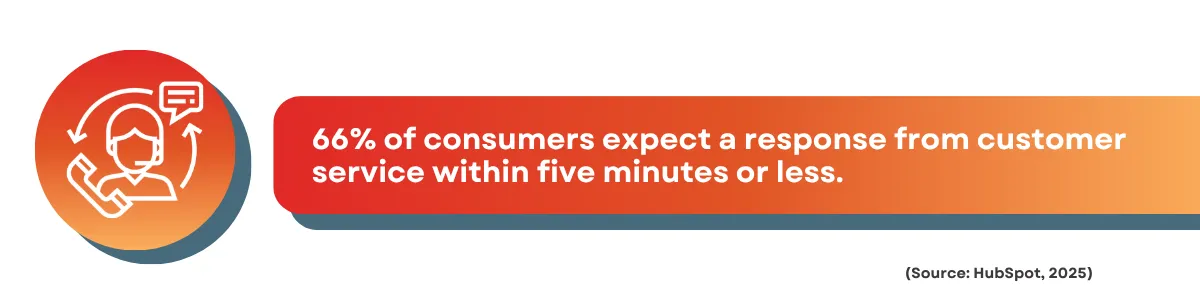
These questions may seem simple to a business, but the answers can help customers decide whether to make a purchase or look elsewhere. A delayed response may interrupt their decision-making process, create unnecessary frustration, or encourage them to consider another provider. Customers do not necessarily expect every concern to be resolved instantly, but they increasingly value businesses that acknowledge inquiries promptly and provide clear, reliable information.
This is particularly relevant for hotels and service businesses, where customer inquiries are often directly connected to purchasing decisions. For instance, travelers comparing accommodations may contact several hotels to ask about room availability, rates, amenities, and booking policies. A hotel that responds promptly helps potential guests move forward with their decisions, while delayed communication may lead them to explore other options.
The same principle applies across other service industries. Clinics receive appointment inquiries, salons answer questions about schedules and pricing, restaurants handle reservation requests, and event venues provide information about available dates and packages. In each situation, customer response time can influence how smoothly customers move from initial interest to booking or purchase.
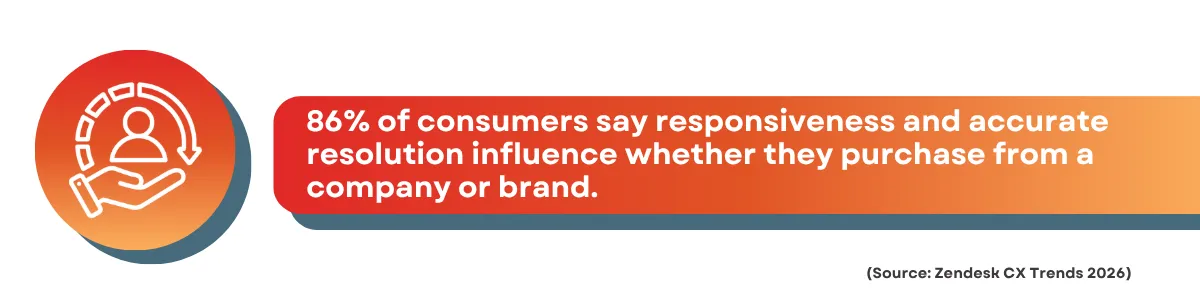
For businesses, improving response speed should not simply mean answering inquiries ahead of competitors. The goal is to reduce unnecessary waiting while ensuring that every response remains accurate, relevant, and helpful. By balancing responsiveness with reliable communication, hotels and service providers can create a more convenient customer experience and support better purchasing decisions.
Automated Replies Can Handle the Questions Customers Ask Repeatedly
Many customer conversations begin with the same types of questions.
Instead of requiring an employee to manually type the same information each time, an automated response system can provide supported answers to common inquiries as soon as a customer starts a conversation.
This is one of the most practical uses of automated replies.
Traditional auto-replies may simply acknowledge that a message was received. Modern AI customer service, however, can be configured to provide more useful responses based on business information and predetermined conversational flows.
For a hotel, that could mean helping with questions about check-in times, facilities, policies, or room information. For another service business, it could involve questions about operating hours, available services, requirements, or the steps needed to make an appointment.
The purpose of automated customer service is not to make every conversation identical. It is to identify predictable interactions where automation can provide an answer without forcing either the customer or the employee to wait unnecessarily.
This also creates a clearer role for human support. Routine questions can be handled through automation, while exceptions, complaints, complex requests, and situations that require judgment can be directed to employees.
Customers Expect Businesses to Be Available Beyond Office Hours
Customers do not always research products and services during a company's operating hours.
A traveler might look for accommodations late at night. Someone may inquire about a service after finishing work. A potential customer could discover a business through social media during a weekend and immediately send a message.
If every inquiry depends on an employee being online at that exact moment, the customer's waiting time will naturally increase.
This is one reason AI-powered customer service is increasingly being used to extend the availability of basic assistance. An automated system can answer supported questions outside staffed hours, while directing other inquiries to the team for follow-up. 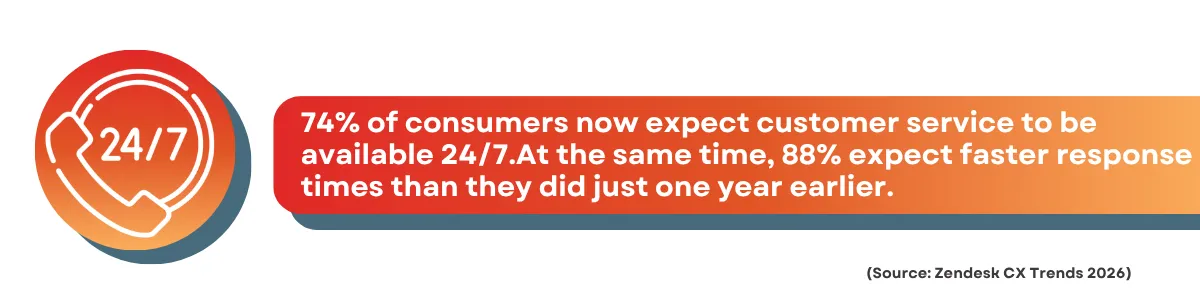
Providing 24/7 customer support through automation does not mean promising that every issue can be resolved without a person. A better approach is to automate the questions that can be handled reliably and provide a path toward human assistance when they cannot.
Smart Automation Should Support Employees, Not Simply Replace Replies
Responding quickly is useful. Responding quickly with the wrong information is not.
Businesses implementing smart automation therefore need to consider which parts of the customer journey are predictable enough to automate and which still require human judgment.
Frequently asked questions, standard service information, basic lead qualification, booking instructions, and similar interactions are often easier to structure. A complaint involving unusual circumstances, a special request, or a problem that falls outside established information may require an employee to take over.
This combination is what makes intelligent customer service more useful than relying on basic automatic messages alone.
Automation can provide the first layer of responsiveness. Employees provide context, judgment, and personalized assistance when a conversation becomes more complex.
This supports responsive customer service: automation answers routine questions promptly, giving employees more time for requests that need human judgment.
How Smicos Helps Businesses Respond Faster
Smicos helps businesses answer common customer questions automatically and lets staff step in when a conversation needs personal attention.
Smicos is built around AI-powered customer communication and provides tools for automating conversations while retaining options for human support. Its platform includes AI and automated replies, chatbot conversation flows, Live Agent support, ticketing, booking management, integrations, and a dashboard for monitoring customer interactions.
For businesses dealing with repetitive inquiries, Smicos can be configured to answer supported questions automatically instead of requiring staff members to type the same response repeatedly. The platform's Story Maker allows businesses to define conversational flows and responses, while pre-built templates and the Smicos Wizard provide different ways to set up a chatbot. Smicos states that its Wizard guides users through chatbot creation without requiring technical skills.
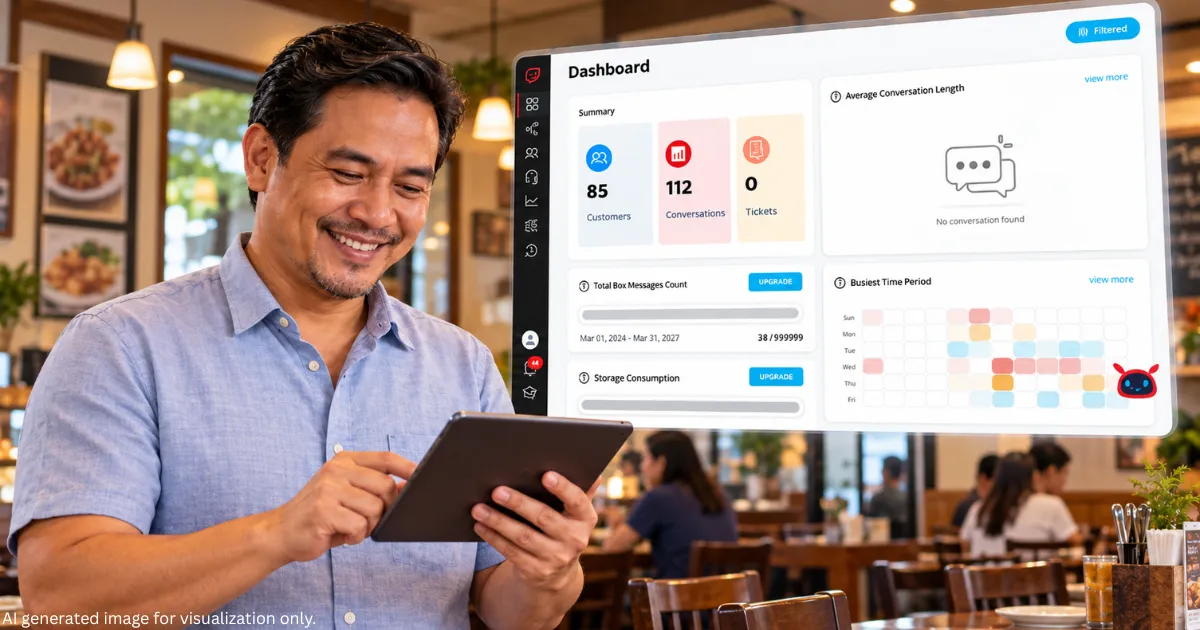
This makes Smicos relevant to several parts of the response-time problem.
A hotel, for example, could configure its chatbot around frequently requested information and guide customers through appropriate conversational paths. A service business could use automation to collect initial information, manage common inquiries, or direct customers toward booking. When automation is no longer appropriate, Smicos' Live Agent feature is designed to route conversations to a support team for human assistance.
Smicos also provides a Ticketing System for managing, assigning, and prioritizing customer inquiries, as well as a Booking Manager that allows customers to schedule services through the platform. It also offers integrations that help businesses manage customer conversations across supported channels, instead of handling each message separately.
The value of these features is not simply that they make replies automatic. They allow businesses to decide where automation is useful and where people should remain involved.
For AI-powered customer service, that distinction matters. Smicos can help take repetitive interactions off the immediate workload of employees while maintaining a route toward human assistance for conversations that require it.
Fast Replies Still Need to Be Useful Replies
As response expectations increase, businesses may be tempted to focus entirely on speed. But a short response time is only valuable when the customer receives information that moves the conversation forward.
A generic acknowledgment may reassure someone that their message has been received, but it does not necessarily answer what they wanted to know. Similarly, an automated answer based on incomplete or outdated information can create additional confusion.
Businesses using an automated response system should therefore review the information their chatbot uses, identify gaps in common conversation flows, and determine when an inquiry needs to be escalated.
This is where the relationship between automation and human service becomes particularly important.
Customer service automation works best when repetitive tasks are automated deliberately rather than when businesses attempt to automate every interaction. Customers can receive immediate assistance for straightforward questions while employees remain responsible for situations where flexibility, context, or judgment matters more.
As a result, the standard is gradually moving beyond simply being fast. Good customer service is not just about replying quickly. It is about giving customers accurate answers, being available when they need help, and providing personal support when necessary.
Conclusion
Fast replies are becoming an expected part of the customer experience as people grow accustomed to services that are available immediately and on demand. For hotels and other service businesses, that shift is especially important because an unanswered question about availability, pricing, bookings, or services can occur while a customer is actively deciding what to purchase.
Meeting those expectations does not require businesses to make every employee available around the clock. Automated replies, AI customer service, and other forms of customer service automation can provide faster assistance for predictable inquiries while allowing staff to concentrate on situations that benefit from human attention.
Smicos fits into this approach by combining automated customer conversations with tools for live support, ticketing, bookings, integrations, and chatbot configuration. Rather than treating automation as a replacement for customer service teams, businesses can use it to reduce unnecessary waiting and make human support available where it has greater value.
As quick responses become part of the modern customer service standard, the businesses that adapt effectively will need to focus on more than speed alone. The goal is to build a service experience where customers can receive the right assistance, at the right time, through the right combination of automation and people.
References
Fontanella, C. (2025, May 13). What’s customer responsiveness? (+ 5 ways to create a customer responsive culture). HubSpot. View source
Smicos. (n.d.). Smicos: Improve business efficiency with Smicos AI chatbot. Retrieved September 24, 2026. View source
Zendesk. (2025, November 18). Contextual intelligence becomes the new standard for exceptional customer experience in 2026. View source
Zendesk. (n.d.). Zendesk CX Trends 2026. Retrieved September 24, 2026. View source